Fallen Lineage Party Guide
Form a squad of up to four, split roles, call turns, and stop wasting Lives in co-op.
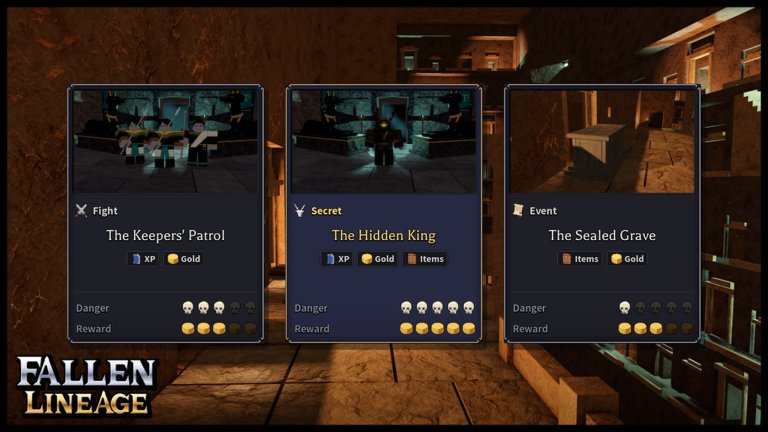
Fallen Lineage supports solo runs and parties of up to four players in the same turn-based roguelite loop. A full squad can clear content that punishes one person covering every job—but only if someone calls turns, roles do not overlap into four egos, and Lives are treated as a shared budget. This Party Guide covers how to form and join a group, how to split tank, DPS, support, and flex seats, when solo is actually better, and how co-op changes the Lives economy after the October 18, 2026 release by odanos.
Pair this page with Getting Started for hub basics, the Combat Guide for threat priority, Best Builds for kit pairs, and the Players Hub when race or Alignment choices are the real bottleneck.
How to form or join a party of four
Fallen Lineage uses Roblox party / in-experience grouping rather than a separate matchmaking lobby. Practical flow most groups use:
- Meet in the castle hub after tutorial so everyone can open Shop, redeem Codes, and confirm race and class before a run.
- Invite through Roblox friends or the in-game party prompt until the squad shows four ready members—or fewer if you intentionally run trio or duo.
- Agree on difficulty expectations out loud. Hard turn-based fights punish silent groups harder than loud ones.
- Confirm each player has finished redeem requirements (~30 minutes playtime, Like, official group) if you planned a codes-first session.
- Leave the hub together so nobody starts a solo instance by accident.
If a fifth friend wants in, rotate seats between floors or run two separate parties. The design cap is four; stuffing more bodies into voice chat does not add combat slots.
Role split that actually works
Think in jobs, not class names:
| Seat | Job | Common bases / branches |
|---|---|---|
| Frontline / tank | Soak, peel, create space | Warrior → Order Knight / Neutral Sellsword; Lancer → Sentinel / Dragoon |
| Primary DPS | Delete the called target | Archer → Marksman / Gunner / Ranger; Rogue/Thief → Assassin / Duelist / Outlaw; Fist |
| Support | Buffs, heals, control windows | Bard → Herald / Skald / Jester; Mage → Order Priest / Neutral Druid |
| Flex | Fill the hole the floor demands | Second Mage (Chaos Pyromancer), second front, or utility Lancer |
Four DPS with no caller is a wipe machine. One tank plus three damage with no buff window is only slightly better. Ideal learning comps put a readable Warrior or Lancer up front, a focused Archer or Rogue on damage, a Bard or Priest-leaning Mage on support, and a flex that can go Chaos burst once the group already executes basics.
Race choice still matters. Sobekan Max HP shines when teaching friends. Anubar Cull tools or Sekmar burn on your strongest player multiplies clean play. Kepra Dawn heals excel when someone else brings the damage seat. See Races and Classes before you lock Alignment paths described on Alignment & Super-Classes.
Caller and turn-order communication
Appoint one caller. The caller does three things every round:
- Names the focus target (lethal threats first—see the Combat Guide).
- Labels the turn as kill, control, or stabilize.
- Calls when support should spend a buff or defensive skill instead of greed damage.
Everyone else follows. Arguments happen after the fight, not mid-telegraph. Voice is ideal; typed callouts work if they arrive before actions lock.
Turn order is not only whose portrait lights first. It is whose decision removes the most future damage. Silent parties default to hitting the lowest health bar, which is often the wrong bar. Practice one callout rule for three fights: never attack a non-threat while a lethal enemy is up.
When solo is better than a party
Party play is not automatically stronger for your account:
- Learning the UI — Solo forces you to own every mistake. Use How to Play and a short solo climb before blaming friends for wipes.
- Unreliable schedules — A duo that disconnects mid-boss wastes more Lives than a clean solo attempt.
- Ego comps — Four Chaos fantasy picks with no Order frontline fail faster than a careful solo Warrior.
- Reroll practice — Spend Tokens and Reset Orbs on your own pace using Rerolls & Lives without peer pressure.
Choose party when you have a caller, complementary kits, and a shared Lives plan. Choose solo when you need reps, when friends are tilted, or when you are testing a new Alignment branch from Best Builds.
Lives economy in co-op
Lives are still per-account fail buffers, but the social cost of a wipe is higher: four people lose momentum together. Treat Lives as a party resource even when the UI tracks them individually.
Rules that cut co-op tilt:
- Do not int for a highlight clip. A preventable death teaches nothing if nobody names the mistake.
- After a wipe, review one decision (wrong target, early ultimate, ignored telegraph)—not twelve personalities.
- Hold Lives for late-run or boss-adjacent failures where restarting wastes the most shared time.
- Redeem active codes on the Codes Hub before a long session so Tokens and Lives are stocked on every account.
- Never expect one player’s redeem to grant for the whole party—each client opens Shop → Codes alone (How to Redeem).
If the same player burns Lives every floor, fix kit or role with Best Builds and Alignment & Super-Classes instead of blaming “RNG.”
Pre-run party checklist
- Four players (or intentional smaller size) in hub.
- Codes redeemed; group Like and playtime gates done where needed.
- Roles spoken: front, DPS, support, flex.
- Alignment goals compatible (Order peel enabling Chaos burst is fine; four Chaos greed is not).
- Caller named.
- One combat rule for the night (example: always focus caller target).
- Bookmark Combat Guide for spike turns.
Common party mistakes
- Starting the run while one friend is still AFK in Shop.
- Letting the loudest player call even when they mis-prioritize threats.
- Stacking three glass seats because Mythic Atenor hype outweighed kit coverage.
- Skipping support buffs to “save time,” then spending two Lives on the same telegraph.
- Arguing Alignment lore mid-fight instead of executing the called plan.
Related pages
- Getting Started — First-hour hub flow before inviting friends
- How to Play — Solo versus party structure in the core loop
- Combat Guide — Targeting, skills, and spike turns
- Best Builds — Synergies that survive hard co-op
- Players Hub — Race, class, and Alignment systems
- Alignment & Super-Classes — Order / Neutral / Chaos picks for seats
A good Fallen Lineage party feels quieter on spike turns and louder in the hub. Form the group, assign jobs, appoint a caller, and spend Lives like they belong to everyone—because the run ends for all of you when the board collapses.
Frequently Asked Questions
Quick answers to the most common questions.
How many players can join a Fallen Lineage party?
Up to four. Solo, duo, and trio runs are valid; a fifth friend needs a different party or a rotation between attempts.
What roles should a four-player party run?
Frontline or tank, primary DPS, support (Bard or Priest-leaning Mage), and a flex seat. Avoid four overlapping DPS egos.
Who should call turns in co-op?
One appointed caller names focus target and whether the turn is kill, control, or stabilize. Everyone else follows.
When is solo better than party play?
When you are learning UI and combat, when friends are unreliable or tilted, or when you are testing a new build without peer pressure.
Do codes and Lives shared across the party?
No. Each player redeems codes on their own account. Lives are per-account, but wipes still cost the whole group momentum.